Firewall Configurations Backup using Ansible and Python
Automated Infrastructure Config Backup Engine
Project Introduction
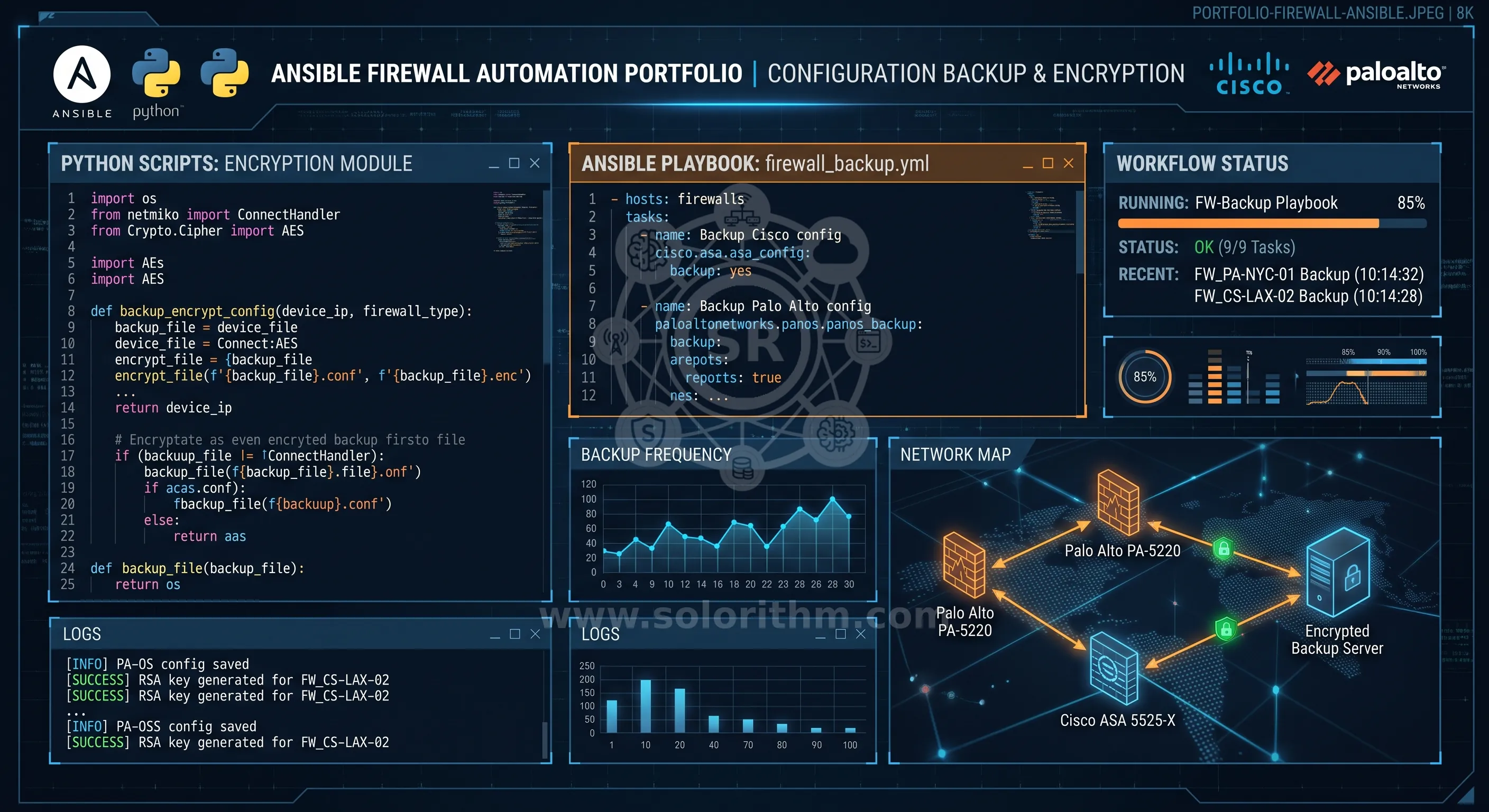
In modern network infrastructures, maintaining backup configurations of firewalls is a critical task to ensure the integrity and security of network environments. We proposed and deployed a solution that integrates Ansible with Python scripts to automate, encrypt, and schedule configuration backups across all clients devices.
Client Requirements
- Automation: Consistently back up firewall setups regularly with zero manual intervention.
- Device Agility: Supporting multiple firewall models across distinct vendors (Cisco, Fortinet, Palo Alto).
- Secure Vault Storage: Encrypting backup files locally and in-transit to protect sensitive credential data.
- Error Alerting: Immediate notification alerts if a scheduled backup job fails.
Architecture & Design
Ansible Playbooks: Orchestration layer managing connectivity, SSH handshakes, and configuration exports.
Python Cryptography: Local Python engine responsible for encrypting exports, validating files, and routing via secure SFTP.
Central Vault Server: Secure repository hosting the automated cron tasks, backup logs, and encryption key variables.
Deployment Process
- 1 Playbook Development: Created modular playbooks using iOS, PanOS, and FortiOS native automation interfaces.
- 2 Python Scripting: Developed scripts using AES-256 encryption libraries to lock and validate backups.
- 3 Automation Setup: Wired Ansible playbooks to cron timers to execute during off-peak hours automatically.
- 4 Failover Tuning: Configured SMTP and Slack webhook alerting to flag failed backups to admins instantly.
Challenges & Mitigations
Conclusion & Handover
This implementation has significantly reduced administrative overhead, eliminated human error risk, and established an bulletproof disaster recovery corridor ensuring configurations are always encrypted, verified, and ready to restore.
Need a Similar Solution?
Ready to deploy, secure, or automate a similar infrastructure capability for your organization? Get in touch with our solutions desk.